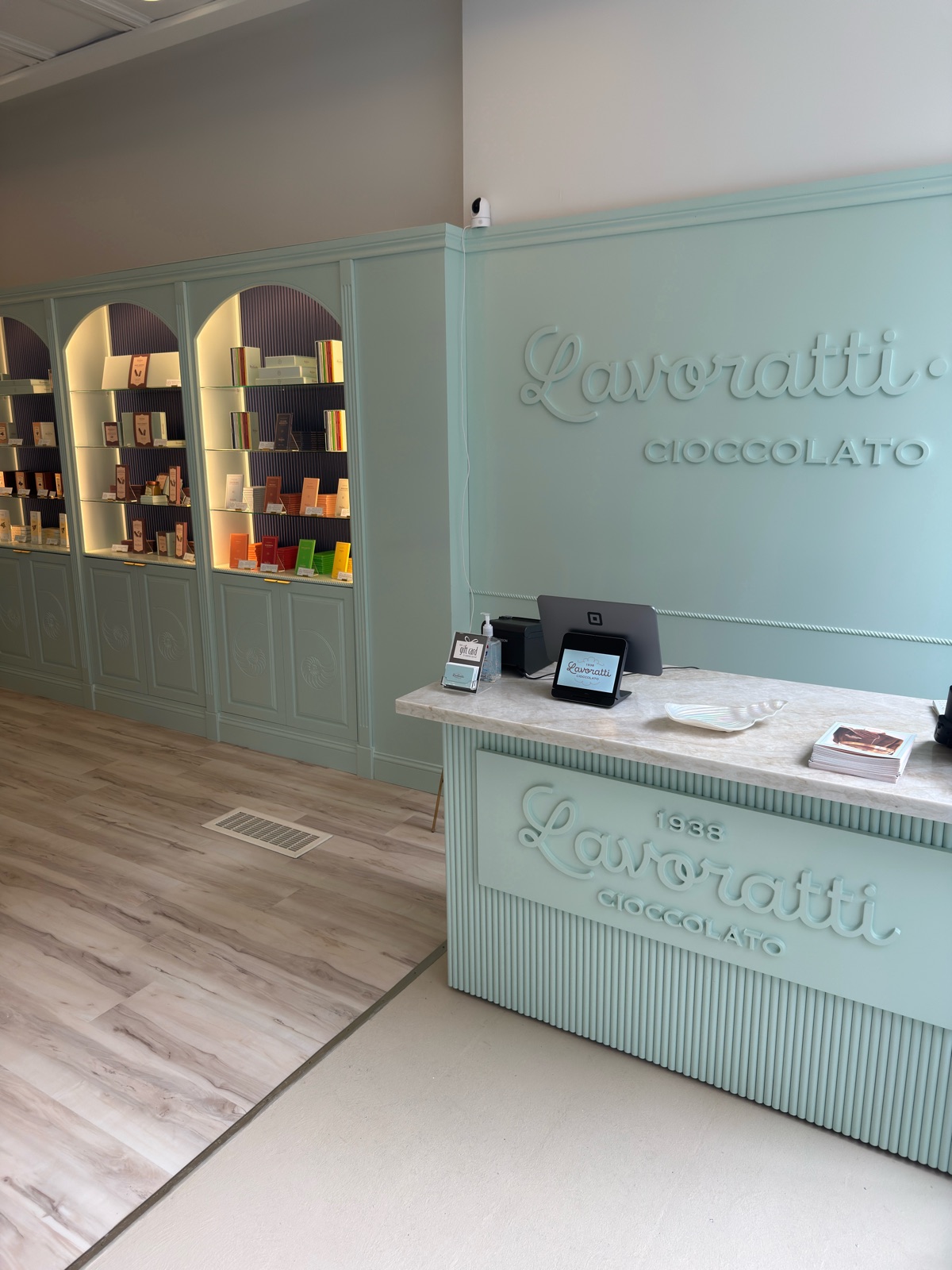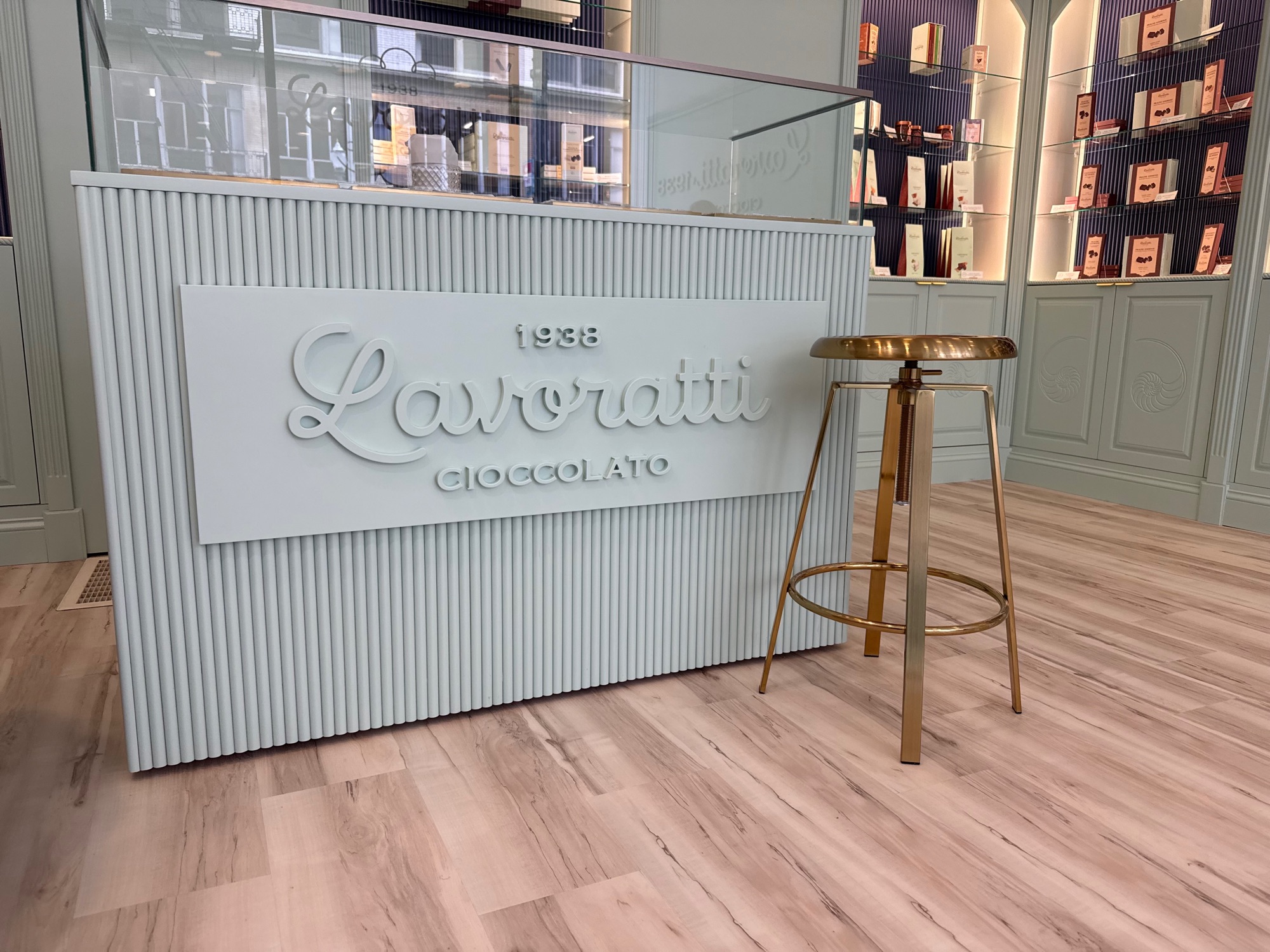
Lavoratti Cioccolato showroom counter with dimensional CNC-routed script lettering on a fluted mint green front
Selected Work

Lavoratti Cioccolato

Eighteen cabinet doors, a mirrored nautilus, and a dimensional showroom sign — a rush job delivered inside a single week.

Client
Lavoratti Cioccolato — heritage chocolatier showroom
Our scope
Artwork rebuild, CNC engraving, dimensional letter fabrication
Client scope
Cabinet construction, finishing, and installation
Materials
Client-supplied cabinet door faces; MDF for the dimensional lettering
Volume
18 door faces, engraved as mirrored left- and right-hand pairs
Timeline
One week, rush — engraving and lettering both delivered

The Brief

The call came in on a rush. Eighteen handmade cabinet door faces, already built, each needing a nautilus engraved into the front — and all of them back in the client's hands by the end of that same week. A showroom was being finished around them, and the cabinetry was the last thing standing between the room and its opening.

The nautilus also had to be mirrored: the spiral opening one way on the left-hand door of a pair and the other way on the right, so a run of cabinetry reads as matched sets rather than eighteen copies of the same tile. That doubles the file prep and leaves no room to lose track of which door is which once they are stacked on the table.

The client had artwork. Artwork is where rush jobs usually go wrong, and this one was no exception — but we found that out on scrap, which is the entire point of a test cut.

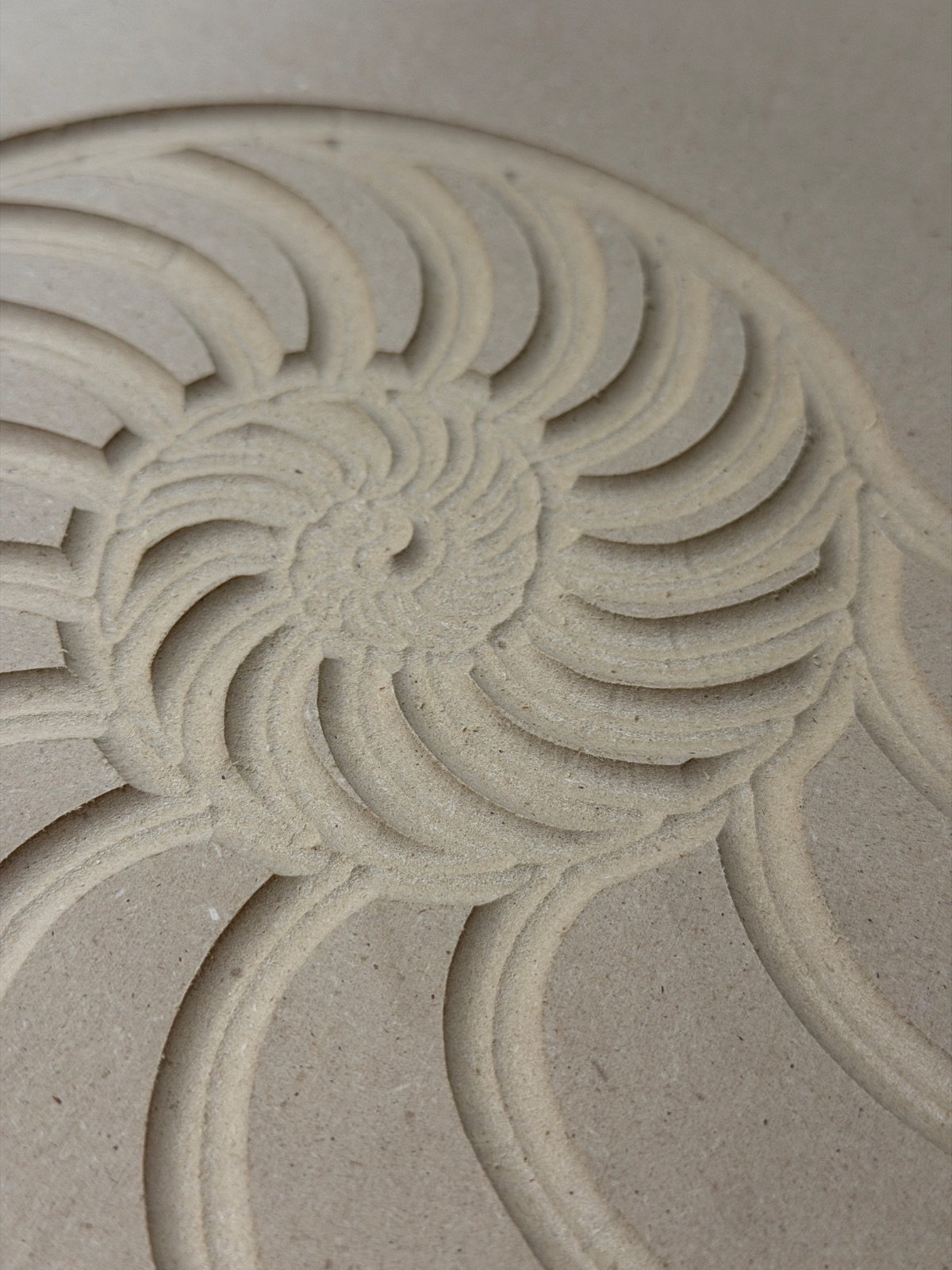
First test cut of the client-supplied nautilus artwork, showing the fine spiral lines carved out as wide open pockets

Step 01 — Test Cut

The client's file, proven wrong on scrap

We never put a client-supplied file straight onto a production part. The first test cut told us everything we needed to know: the artwork's overlapping strokes had no consistent width, so the cutter cleared them as broad open pockets instead of drawing lines. The spiral flattened into a run of blobs, the chambers merged as they wound toward the centre, and the shape lost the crispness that makes a nautilus a nautilus. Beautiful as a drawing. Unusable as a toolpath.
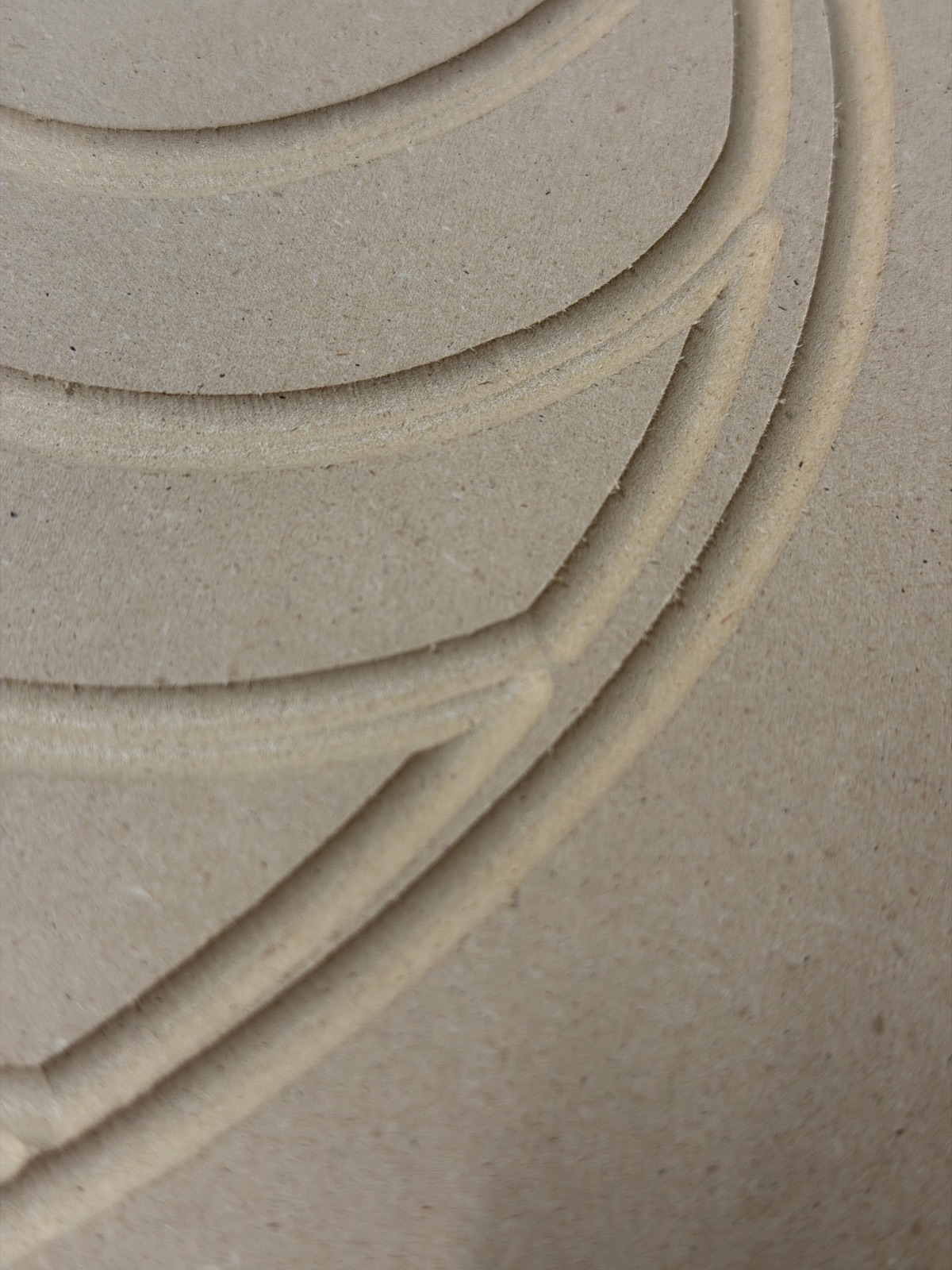
Close-up of the failed test cut showing wide fuzzy channels with torn edges instead of clean engraved lines

Step 02 — Line Quality

Rebuilding the artwork as a cuttable file

This close-up is the diagnosis. Where the original wanted lines, the router left channels — wide, soft-edged, and fuzzy at the shoulders, exactly the kind of surface that only looks worse once paint goes over it.

So we rebuilt the nautilus from scratch as clean single-width vectors, scaled the geometry to the door panel, and matched the line weight to a specific bit so every stroke would be cut once, at one consistent depth, with a sharp shoulder. Then we cut it again. And again, until the test part looked like the drawing.

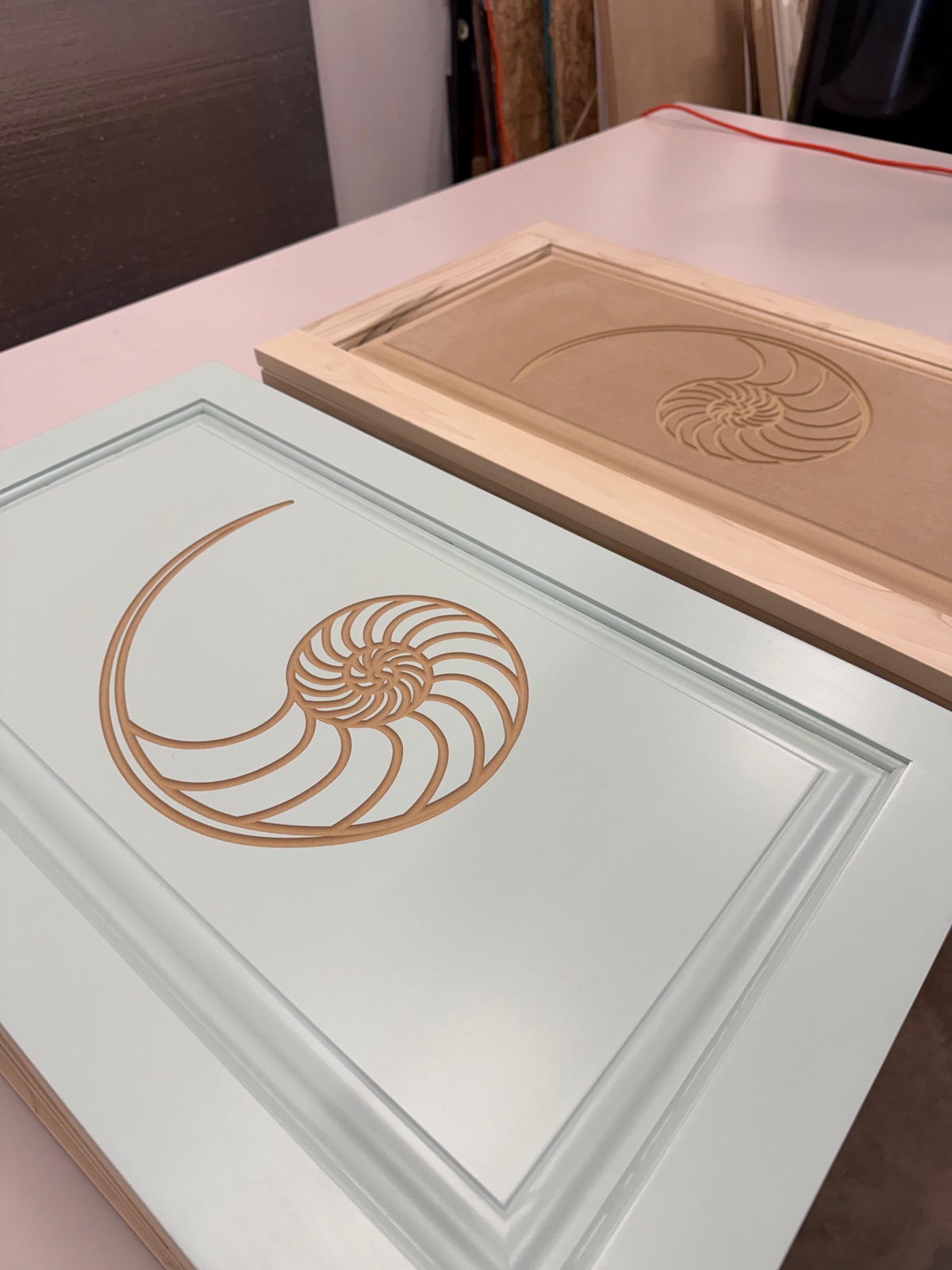
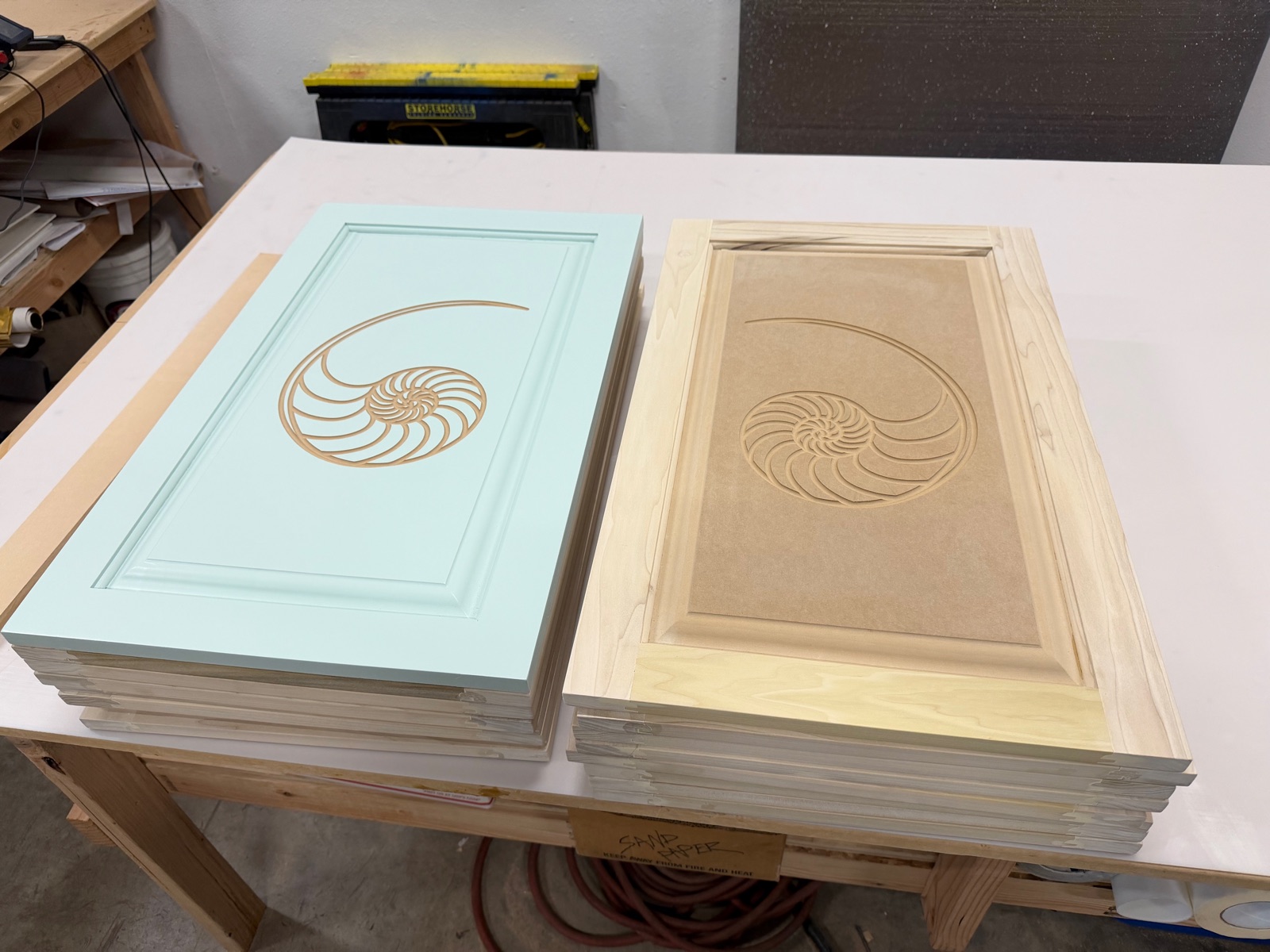
Stacks of engraved cabinet door faces from the production run, the client's mint finish sample beside a bare panel showing the mirrored nautilus

Step 03 — Production Run

Eighteen doors, mirrored left and right

With the file proven, the production run became the easy part — which is exactly how it should be. Doors came through in matched pairs, each one indexed so its spiral faced its partner, and nothing about the machine time was a surprise.

The mint door in front is the client's own finish sample, engraved so they could see how the cut would read once colour went over it. Behind it, a bare panel carries the same nautilus in raw material. Same file, mirrored. Same depth. Eighteen times.

Detail of the mirrored nautilus engraving on the client's mint finish sample, with a raw engraved panel behind it

Step 04 — The Mirrored Pair

The detail that sells the whole run

Up close the payoff is obvious. The line holds an even width from the outer sweep all the way into the tightest chambers at the centre, the shoulders stay crisp enough to take paint without filling in, and the tail carries off the panel in one uninterrupted stroke.

Set two doors next to each other and the spirals turn toward one another. It is a detail nobody consciously notices and everybody feels.

A rush job does not mean skipping the test cut. It means the test cut happens on Monday instead of Thursday.

— EastSide CNC
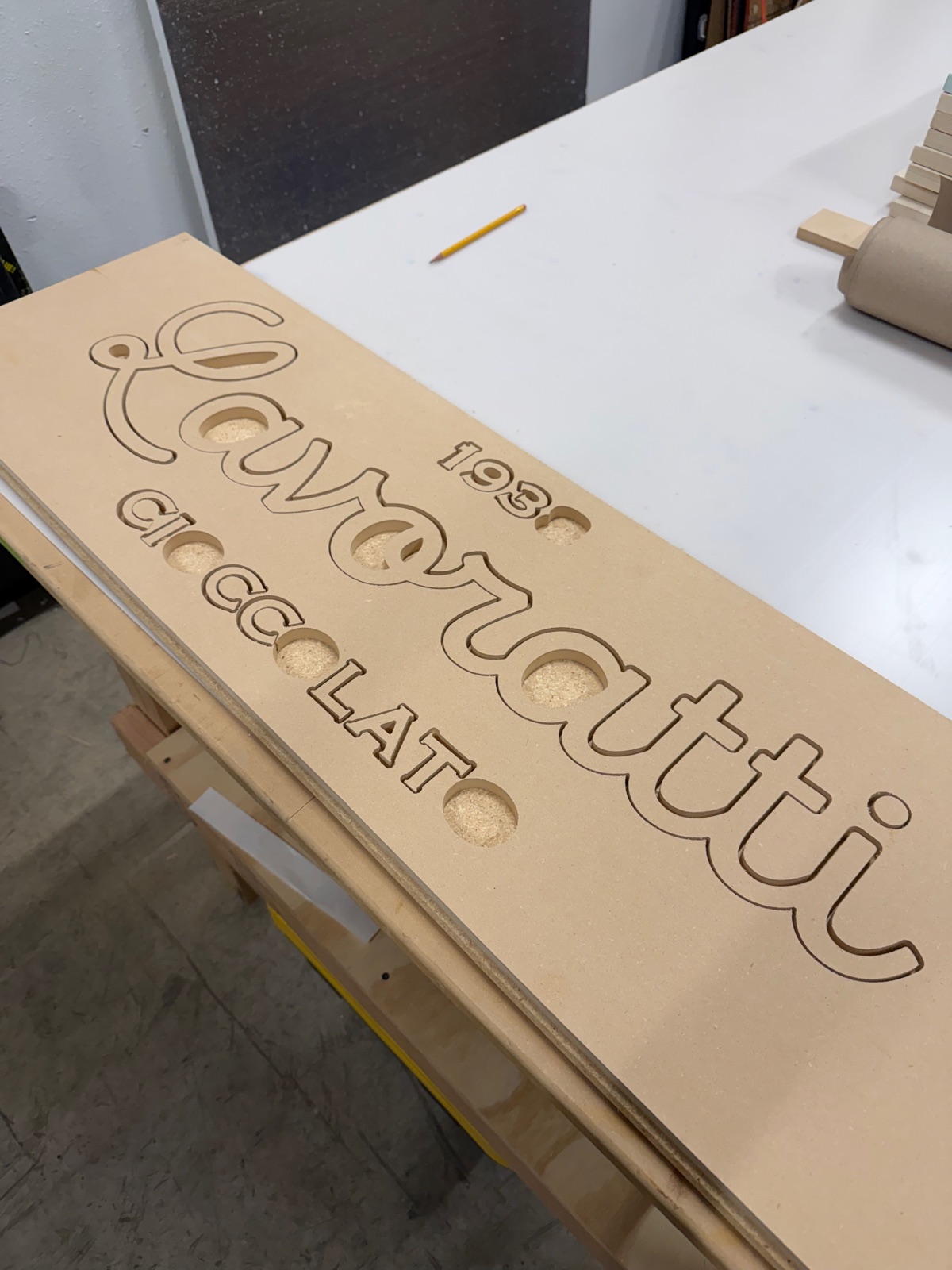
Lavoratti Cioccolato script lettering and 1938 date routed from MDF as individual dimensional letters

Step 05 — Dimensional Lettering

A pickup order, squeezed into the same week

Partway through the run the client saw the engraved doors and asked whether we could handle the showroom sign as well. That is the best kind of phone call, and the answer was yes — same week.

We cut the Lavoratti script, the CIOCCOLATO subline, and the 1938 date from the same MDF already on the floor, profiled as individual dimensional letters ready to mount. Same material meant the client could install them and paint them to match the casework going into the room, so the sign reads as part of the millwork rather than something applied on top of it.

Installed

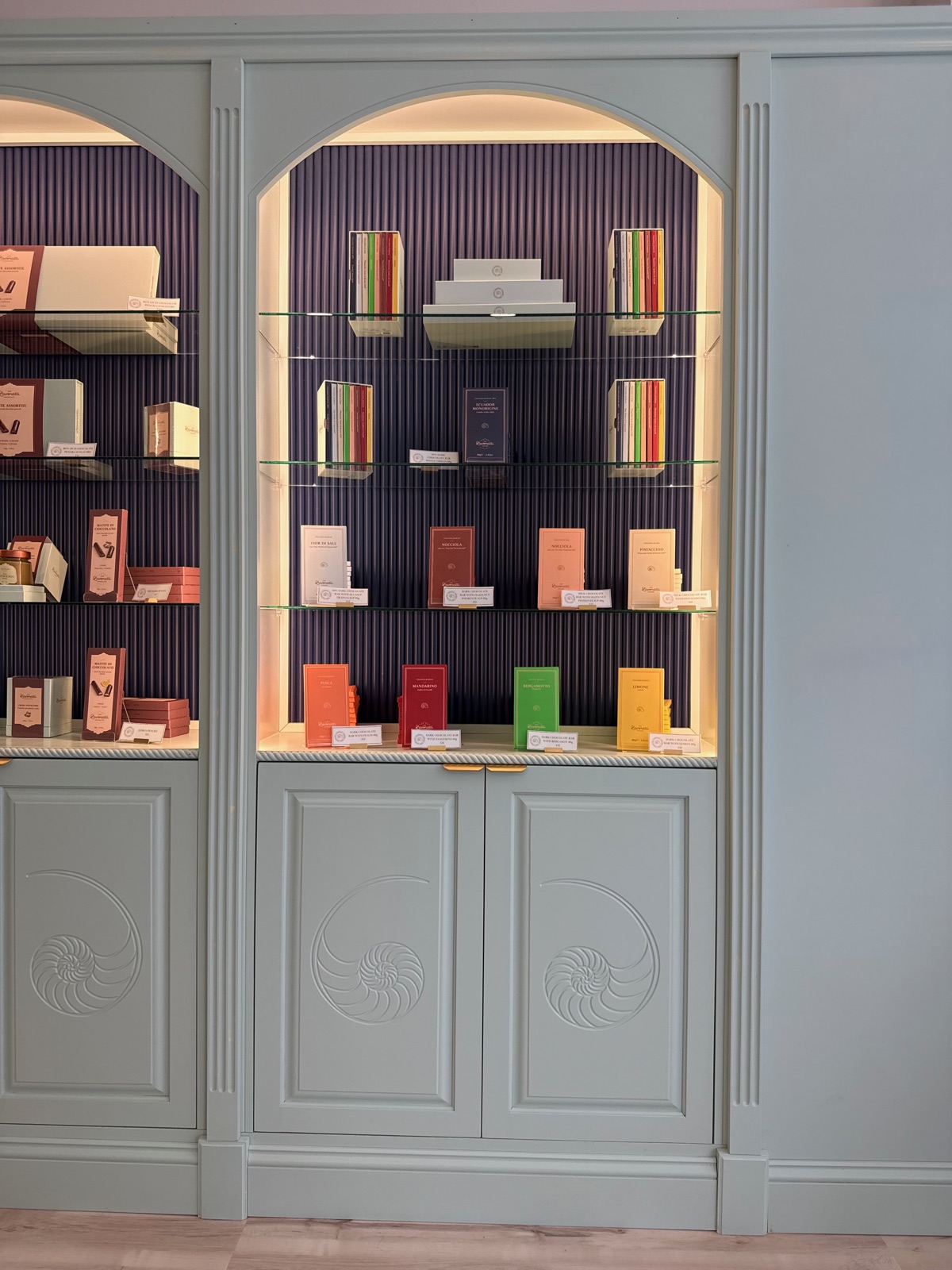
Finished showroom cabinetry with the nautilus engraving reading tone on tone beneath a lit arched display niche
Wide view of the finished Lavoratti Cioccolato showroom, engraved cabinet doors on the left and the dimensional lettering at the counter

The client painted and hung the doors themselves once the engraving came back, so the nautilus reads tone on tone — a shadow line rather than a graphic. That was always the intent. From across the showroom you register the shape; up close you can see it is cut into the door rather than printed on it.

Reflection

Nothing about this job was technically complicated. What made a one-week turnaround possible was refusing to skip the single step that always looks skippable under deadline: proving the file on scrap before touching a client's finished doors. Eighteen handmade door faces is a great deal of material to be wrong about, and there was no second set sitting in the back.

It is the same reason the lettering could be added mid-week without drama. Once the engraving was running clean, the machine time was predictable and the material was already in the shop, so saying yes cost us an evening instead of the schedule. If you have a room going in and a deadline that has already started, that is the kind of shop you want on the other end of the phone.

The showroom is the client's build — their cabinetry, their finish work, their install. Our part was the engraving and the lettering: a narrow slice of a much larger room, and a good example of what a collaboration looks like when everyone stays in their lane. Photographs shared with their permission.

Capabilities Used

  • CNC Engraving
  • Vector Artwork Recreation
  • Dimensional Letters
  • Cabinet Door Faces
  • Retail Millwork

Working against a deadline?

Send us the file and the date. If we can hit it we'll tell you right away — and if we can't, we'll tell you that too.